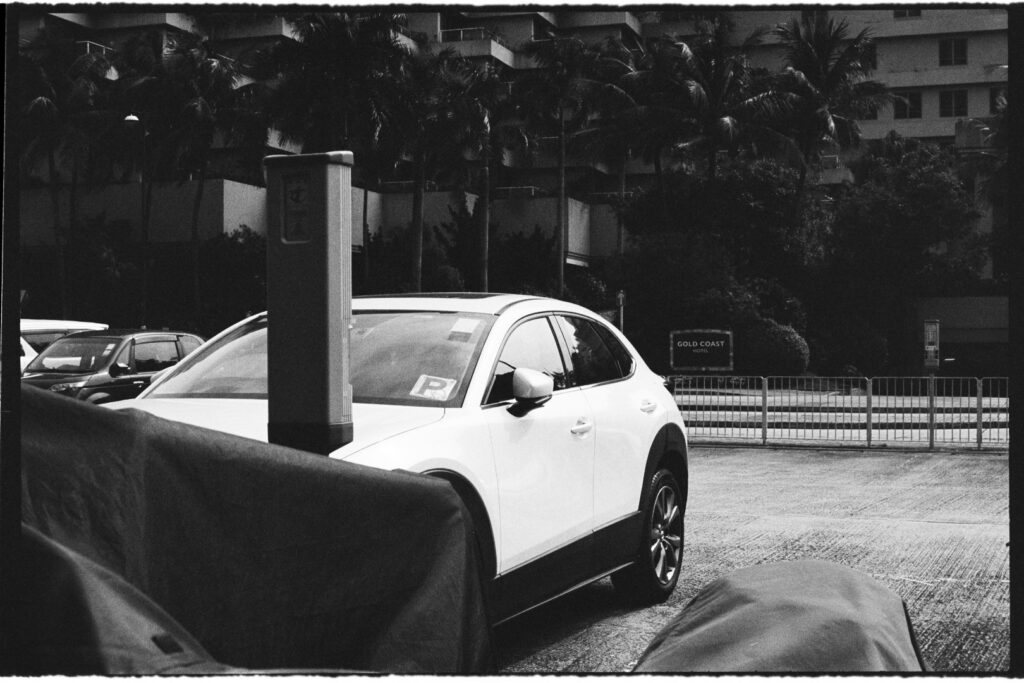
In HKSAR v Ng Tze Kin [2026] HKCFA 16, Mr Gordon Chan raised before the Court of Final Appeal points of law of great and general importance and grounds of substantial and grave injustice.
In dismissing the leave to appeal, the CFA clarified the construction of Regulation 12K of the Road Traffic (Driving Licences) Regulations (Cap 374B), which provided the “P” plate display requirement for probationary licence holders. Before proceeding to the CFA, the prosecution had provided little justification for their contended statutory interpretation.
Nowadays, on Hong Kong’s roads, many vehicles display “P” plates in various ways. This judgment provided much-needed guidance for probationary drivers on how to comply with the regulation.
12K. Driving under probationary driving licences
(1) The holder of a probationary driving licence shall not drive a motor vehicle of a class specified in the licence unless—
(a) in the case of a probationary driving licence to drive a private car or light goods vehicle, the motor vehicle has—
(ii) a Small Plate securely fixed at the rear of the motor vehicle, or on the left-hand side of the rear windscreen of the motor vehicle, in such a manner that the Plate is clearly visible from the rear of the motor vehicle
When this case first went to trial at the Magistracy, it was for failure to display “P” plates on the rear of the Applicant’s private car. Challenges were made to both the factual finding and the interpretation of Reg 12K. The factual finding was overturned on appeal. At the High Court, it was accepted that a rear P plate might have been displayed.
The entire case before the CFA concerns only the statutory interpretation of Regulation 12K. The Applicant contended that a wider interpretation should be adopted, that as long as the “P” plate is located at the rear of the vehicle, and that it is clearly visible to those at the rear, it has satisfied Regulation 12K. This is an open construction, especially when the prosecution failed to provide any justification below for departing from the plain statutory language. While other display requirements under the Road Traffic Ordinance (Cap 374) had used much more stringent language. The Applicant had also raised constitutional arguments in the construction.
On the other hand, the Respondent contended that a strict construction should be adopted. Once the “P” plate is displayed on the windscreen, it must be put on the left. In the leave application, the respondent provided, for the first time, that Hong Kong’s right-hand-drive jurisdiction justified a strict construction of Regulation 12K. The CFA accepted this background and held that the maxim “expressio unius est exclusio alterius” (the expression of one thing is the exclusion of the other) applied in this regulation, and that the application was not reasonably arguable.
In the end, the CFA held that the points of law of great and general importance are not reasonably arguable. On the other hand, the complaint on two grounds of substantial and grave injustice did not affect the main dispute in the appeal.
This case had shed light on an interesting legal issue and was covered by The Witness in their Legal 101 series.